Pushkar Fair India 2010
Discover the Indian desert in a unique way. ‘Pushkar Fair’ remains at ones disposal depicting the colorful display of Rajasthan's rural lifestyle, traditional attires, exclusive performing arts, and arts & crafts. One of the most famous India travel options, The Cattle and Camel Fair at Pushkar constitutes one of its own kinds in the entire world.
We at ‘tnt’ make sure to give you the best of fair series. Our acquaintance with all the key aspects of ‘Pushkar Fair’ gives you a unique opportunity to explore its every facet with élan.
Pushkar
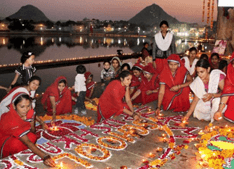
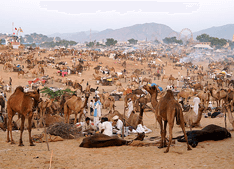
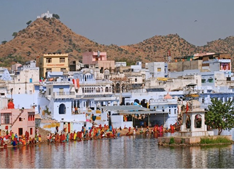
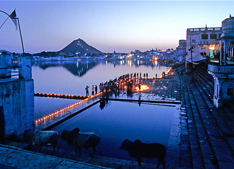
The Cattle Fair of Pushkar is the spotlight of an Indian holiday. It's during this period that the population of 14,000 swells to over 200,000 while the festival hosts over 50,000 camles which are sold, raced and decorated. You can observe devotees taking a holy dip in the Pushkar Lake and seeking blessings at the only Brahma Temple.

Pushkar Fair Tour
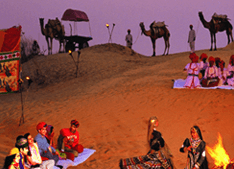
The annual Pushkar Camel Fair is an experience that will make for a magical sojourn to Rajasthan. A tented city is created adjacent to Pushkar Lake during the full moon days for this fair and it is here that thousands of men and women cover the sand dunes and indulge in festivities, trade in livestock, handicrafts, participate in camel races, dances, drama, and music competitions.
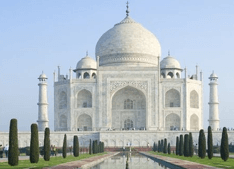
Best Selling Tour of The Year: We have designed a tour program that is reaching every corner of Rajasthan and will be presenting you Rajasthan at its best. We have named this tour Rajasthan at its Best! It will be giving you a chance to see the Taj Mahal as well. Rajasthan at Its Best will show you the desert of Jaisalmer, lakes of Udaipur, forts of Jodhpur, Palaces of Jaipur with the Indian Hospitality in Village Hudeel.

History of Pushkar City
Myth says that Lord Brahma was on his way to search for a suitable place to perform a 'Yagna' (a fire sacrifice) while contemplating, a lotus fell from his hand on the earth and water sprouted from that place. One of them was Pushkar where Lord Brahma performed "Yagna". Worship of Brahma was considered highly important at the end of the first millennium BC. Every year thousands of devotees throng the lake around the full moon day of Kartik Purnima in October-November to take a holy dip in the Pushkar Lake. Huge and colorful Camel Fair "The Pushkar Fair", is also held during this time. Pushkar fair is well-known for its camel trading and other attractive activities.

Location and Climate
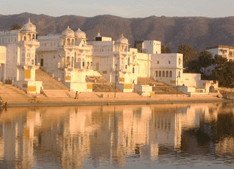
The small and beautiful town of Pushkar is set in a valley just about 11 km off Ajmer in the north Indian state of Rajasthan. Surrounded by hills on three sides and sand dunes on the other, Pushkar forms a fascinating location and a befitting backdrop for the annual religious and cattle fair which is globally famous and attracts thousands of visitors from all parts of the world.
Pushkar has an extreme climate. The maximum temperature during the summers can go up to 40-45°C while in the winters it can be below 10°C. There is not much rain during the monsoon. The best season to visit this place is in the winters (October to March).

IMPORTANCE
Pushkar is among the five dhams or pilgrimages that are held in high esteem by Hindus, the others being Badrinath, Puri, Rameswaram, and Dwarka. It is said that in battle lord Brahma killed the demon Vajra Nabh with a lotus flower, whose petals floated down to earth and landed in three places in and around Pushkar where lakes sprang up. According to legends, Pushkar Lake was surrounded by 500 temples and 52 palaces (several rajas and maharajas maintained palaces here for pilgrimage) at one point. The Brahma temple is the most important temple here and is, in fact, the only Brahma temple of India.

Shopping & Recreation
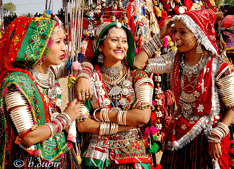
The contrast to the blank desert is the riot of Colours - the large gaudy turbans of the native males arriving here to trade their animals or to set up the stalls to cater to the booming captive market, and the loud hues of the pleated ghagaras (ankle-length skirts) of the belles bangled by the armful, bejewelled from head to toe-adding charm and zest to the massive affair. A large number of traders gather at the Pushkar Fair and set up shops. They sell a host of products like bead necklaces of Nagaur, woollen blankets of Merta, textiles printed in Ajmer and Jodhpur, brassware of Jodhpur and Jaipur etc. Also on sale are saddles, ropes, and assorted household items. Vendors peddle their dazzling range of wares at hundreds of roadside stalls. Small groups of men and women can be seen tatooing names and pictures on their hands and other parts of the body.During the fair, cultural shows and exhibitions are organized to enliven the event.